The short version
Pick Toast if
- You run full service, a busy kitchen line or more than one location
- You want kitchen screens, handhelds, payroll and online ordering from one vendor
- You want one company to call, any hour, on every plan
Pick Clover if
- You run one counter-service spot and watch every dollar
- You have a bank or seller you trust, with a rate and contract in writing
- You want to pick your own apps for loyalty, payroll and delivery
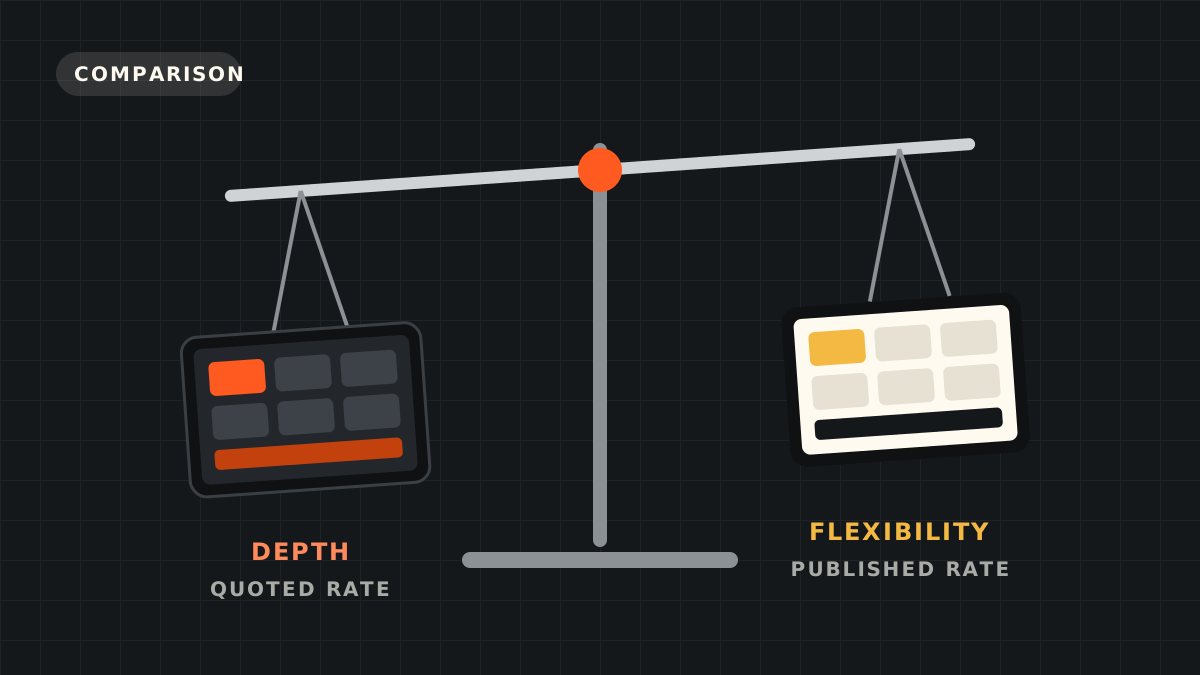
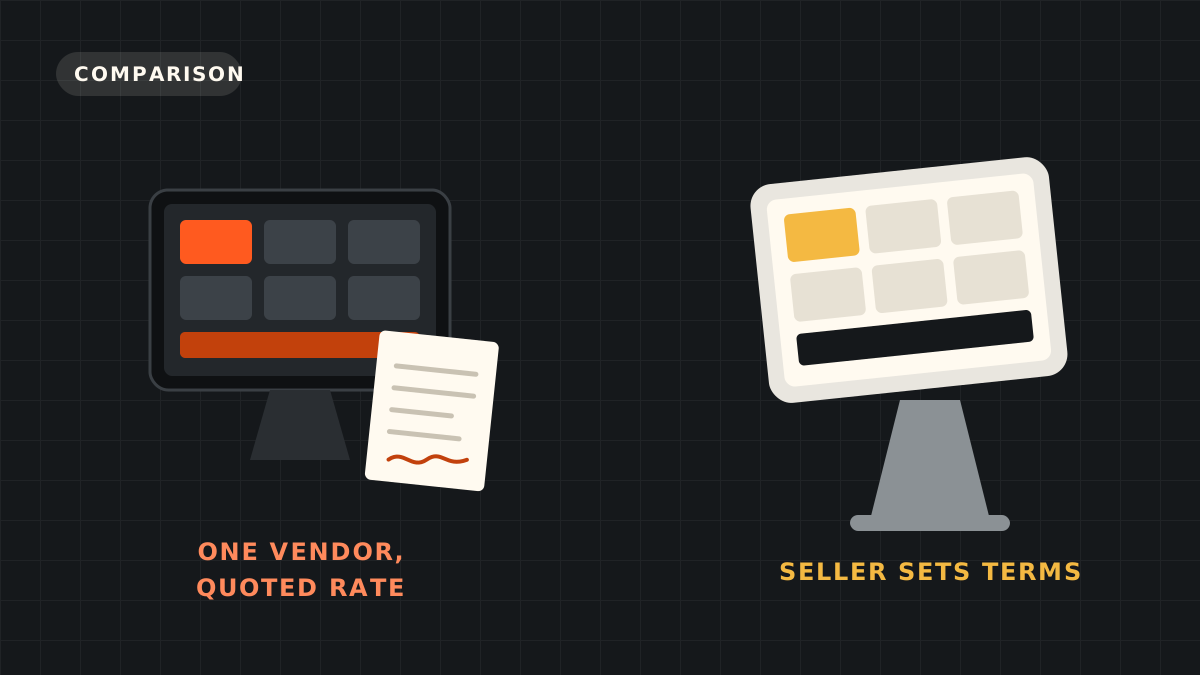
At the same card volume, a well-priced Clover often costs less than Toast. The catch is that "well-priced" is not guaranteed. Sellers set their own rates, hardware terms and contract length, and the sources we checked disagree on Clover's plan prices for that reason. Get a Clover quote in writing, get a Toast quote, and compare the full yearly cost.
Side by side
| What | Toast | Clover |
|---|---|---|
| Software price | $0 Starter Kit (higher rate), $69/mo Point of Sale, quoted above that | Per plan and per seller. Reported from about $60 to $90 a month direct. Bundles with hardware reported at $135 to $354 a month over 36 months |
| In-person rate | About 2.49% + $0.15 on the paid plan, 3.09% to 3.69% + $0.15 on $0 | Published as 2.3% + $0.10 on restaurant plans. Reported up to 2.6% + $0.10 on some plans. Resellers set their own |
| Online and keyed rate | About 3.50% + $0.15 | 3.5% + $0.10 |
| Contract | 24 or 36 months, auto-renews | Direct: reported as no long-term processing contract. Bank and reseller deals: often 36 months, sometimes 48, with auto-renewal |
| Early exit | Remaining software fees plus any hardware balance | Reseller exit fees reported at about $295 to $595, but set by your own agreement. Leased hardware can add more |
| Hardware | Toast-only Android devices: countertop kit about $1,203 | Mini, Station Solo and Duo, Flex, Go. Reported about $500 to $900 for a Mini or Flex and $1,400 to $1,900 for a Station. Locked to Fiserv processing |
| Kitchen display | Toast KDS, part of the system | Clover Kitchen Display. Reported hardware $300 to $900, plus about $25 a month per device in one source |
| Handhelds | Toast Go 3, about $599 | Clover Flex, about $499 to $749 depending on seller |
| Online ordering | Toast Online Ordering, about $75/mo add-on | Sources split: one says included on restaurant plans, others say a third-party app at about $20 to $50 a month. Ask your seller |
| Payroll | Toast Payroll, first party | No native payroll. Gusto is available through the App Market |
| Support | Chat 24/7; phone 7 a.m. to midnight ET daily | Clover lists 24/7 phone support. Help with your account may come from the reseller |
What it costs at $30,000 and $80,000 a month
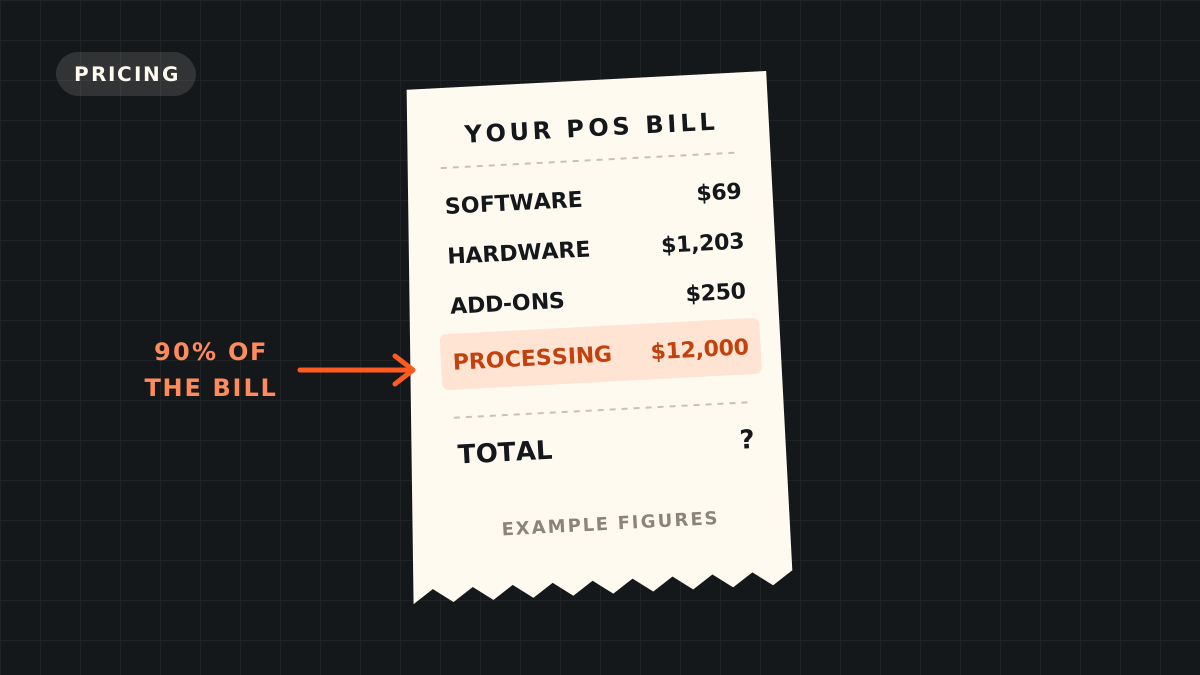
These examples use a $32 average check. That is about 938 card transactions a month at $30,000 and 2,500 at $80,000. One terminal, no kitchen screens, no online orders. Hardware is shown on its own line because the two systems sell it in different ways.
| Setup | $30,000/mo ($360,000 a year) | $80,000/mo ($960,000 a year) |
|---|---|---|
| Toast Point of Sale ($69, 2.49% + $0.15) | about $11,480 | about $29,230 |
| Toast Starter Kit (3.09% + $0.15, $0 software) | about $12,810 | about $34,160 |
| Clover direct (2.3% + $0.10, $89.95/mo software) | about $10,480 | about $26,160 |
| Clover reseller (2.6% + $0.10, software at a $135/mo bundle that includes a Mini) | about $12,100 | about $29,580 |
Hardware is extra on the Toast rows (about $1,203 for a countertop kit if you buy it) and extra on the Clover direct row. The Clover reseller row already includes it in the $135 bundle.
What the numbers say:
- Clover at published direct rates is cheaper. About $1,000 a year at $30,000 a month and about $3,100 at $80,000. The gap grows with volume because the rate matters more than the software fee.
- A reseller rate can erase that. At 2.6% + $0.10 with a bundled lease, Clover lands about where Toast does at $80,000 a month and above it at $30,000.
- Your Toast quote can move too. Toast says it will try to match your current processor. A quote 0.2 points under 2.49% saves about $720 a year at $30,000 a month and about $1,900 at $80,000.
- Add-ons change the picture. A full-service room with kitchen screens, handhelds, online ordering and payroll adds far more than the gap above. Price the setup you will really run.
Run your own volume in the POS processing fee calculator. For Toast's plans and add-ons in detail, see the Toast pricing guide and Toast fees.
Compare POS quotes, free
How many POS stations do you need?
About a minute. No cost, no obligation.Contracts: where Clover gets tricky
Toast's terms are the same for everyone: 24 or 36 months, with automatic renewal. Leaving early means paying the remaining software fees and any hardware balance. Toast hardware runs only Toast.
Clover has no single contract. Bought direct from Clover, reports say there is no long-term processing contract. Bought through a bank or reseller, the agreement is theirs. Three-year terms with auto-renewal are common, and one source describes a first term of 48 months. Clover devices are tied to Fiserv processing, so you cannot take a Clover terminal to another processor. If the lease or the contract is bad, the terminal does not help you leave.
Before you sign either one, ask for:
- The contract length and the renewal rule.
- The exact early exit cost in dollars, including any hardware lease.
- Whether the rate can change during the term, and with how much notice.
- Who you call when the system is down on a Friday night.
Where Toast is stronger
- Full service. Coursing, seat numbers, a mature kitchen display and Toast Go handhelds are built into one system. Clover restaurant plans can do it, but you assemble more pieces, and some come from third-party apps.
- One vendor. Online ordering, payroll, inventory and delivery come from the same company that sells the POS.
- Multi-location. Shared menus with store pricing and group reporting. See the multi-unit POS comparison.
- The same terms for everyone. You are not depending on which seller you found.
Watch out for: the 24 to 36 month contract, a quoted rate that can rise, add-ons that stack up, and hardware with no resale value.
Where Clover is stronger
- Lower cost at published rates. 2.3% + $0.10 in person beats Toast's usual quote on both rate and per-transaction fee.
- Hardware choice. A Mini for a counter, Flex handhelds, a Station for a bigger line.
- Apps. A large App Market lets you pick your own loyalty, accounting and delivery tools.
- A local seller. A bank or dealer you know can be a real person to call, and a good dealer may quote interchange-plus pricing.
Watch out for: reseller rates and leases, 36-month terms, hardware locked to Fiserv, restaurant features that depend on paid apps, and PCI or chargeback fees listed in some sources.
Switching notes
- Clover to Toast: check the exit cost in your Clover agreement first. Plan to rebuild the menu and modifiers, and expect to buy Toast hardware. Clover terminals cannot be reused. See the POS migration checklist.
- Toast to Clover: Toast hardware will not run Clover. Work out the remaining Toast software fees, then compare against the Clover bundle you are offered.
- Gift cards and tabs: open balances and stored cards do not move on their own. Ask both vendors how they are handled.
- Timing: switch in your slowest month, and run both systems for a day or two if the contract allows.
Which one should you pick?
Pick Toast if you run full service, need kitchen screens and handhelds, or have several locations, and you want one vendor and long support hours. Get the rate quoted against your statement and the exit cost in writing.
Pick Clover if you run a single counter-service restaurant, a seller you trust gives you a low rate and a short, clear agreement, and you are comfortable choosing your own apps. If the only Clover offer is a 36-month lease with a high rate, Toast is usually the better deal.
See also our ranked picks for small restaurants, Toast vs Square, Toast vs SpotOn and the POS comparison grid.
Common questions
Is Clover cheaper than Toast?
Often, at published rates. Clover's direct in-person rate is 2.3% + $0.10, against about 2.49% + $0.15 for Toast's paid plan. At $80,000 a month that is roughly $3,000 a year. But a reseller can charge more and add a lease, which can erase the gap.
Does Clover require a contract?
It depends on who sells it. Direct from Clover, reports say there is no long-term processing contract. Through banks and resellers, three-year terms are common and some run longer. Toast usually asks for 24 or 36 months.
Can I use a Clover terminal with another processor?
No. Clover hardware is tied to Fiserv processing. Toast hardware is tied to Toast Payments.
Which is better for a full-service restaurant?
Usually Toast. Coursing, handhelds, kitchen screens, payroll and online ordering come from one vendor with 24/7 chat support. Clover can work for full service, but more of it depends on add-on apps and on your seller.
Which is better for a small counter-service spot?
Clover can be, if you get a low rate and a short agreement in writing. If you want the whole system from one company, Toast is simpler.
Sources: Tech.co Toast vs Clover (Jun 2026) and Clover POS pricing (Sep 2026); NerdWallet Clover review; UpMenu Clover pricing (May 2026); CostBench Toast vs Clover; Katalyst on exit costs (Sep 2026); Loman Clover vs Toast; Next Door Payments. Clover prices vary by seller and sources disagree, so treat them as ranges. Checked October 2026.
Sources
- Tech.co: Toast vs Clover
- Tech.co: Clover POS pricing
- NerdWallet: Clover POS review
- UpMenu: Clover POS pricing
- CostBench: Toast vs Clover
- Katalyst: What it costs to leave your POS
- Next Door Payments: Clover for restaurants
Disclosure: we are referral partners for Toast. If you request a quote through a link on this page and become a customer, we may receive a fee at no cost to you. Partner fees do not change what we recommend. How we make money.