Gift card liability calculator
Roll your gift card balance forward for the month, estimate breakage, and find the gap between your POS report and your gift card provider.
This is a working estimate for your own reconciliation, not accounting or legal advice. When and how you book breakage depends on your accountant and your state's unclaimed property rules.
How the math works
- Ending liability = start balance + sold or reloaded − redeemed + adjustments.
- Expected breakage = ending liability × your historical breakage rate.
- Expected to be redeemed = ending liability − expected breakage.
- Gap to provider = your ending liability − the provider's ending balance. A plus number means your books show more owed than the provider does.
Example: start at $18,450, sell $6,200, redeem $5,150 and void $75. Ending liability is $19,425. At 8% breakage, about $1,554 is unlikely to ever be redeemed. If the provider shows $19,390, you have a $35 gap to explain.
Where the gap usually comes from
- Timing. The POS business day and the provider's day end at different hours. Late-night sales land in different months.
- Online sales. E-gift cards sold on a website may never touch the POS report.
- Manual loads. Cards loaded by a manager for comps or donations, outside a sale.
- Voids after settlement. A sale voided in the POS after the card was already activated with the provider.
- Cross-location use. A card sold at one store and redeemed at another moves liability between entities.
What is breakage?
Breakage is the value of gift cards that will never be redeemed. Most restaurants estimate it from their own history: the share of value sold two or three years ago that is still unused. Under current revenue rules many companies recognize expected breakage over time as cards are redeemed, rather than all at once. Your accountant decides the method.
Next up
Read the full comparisons
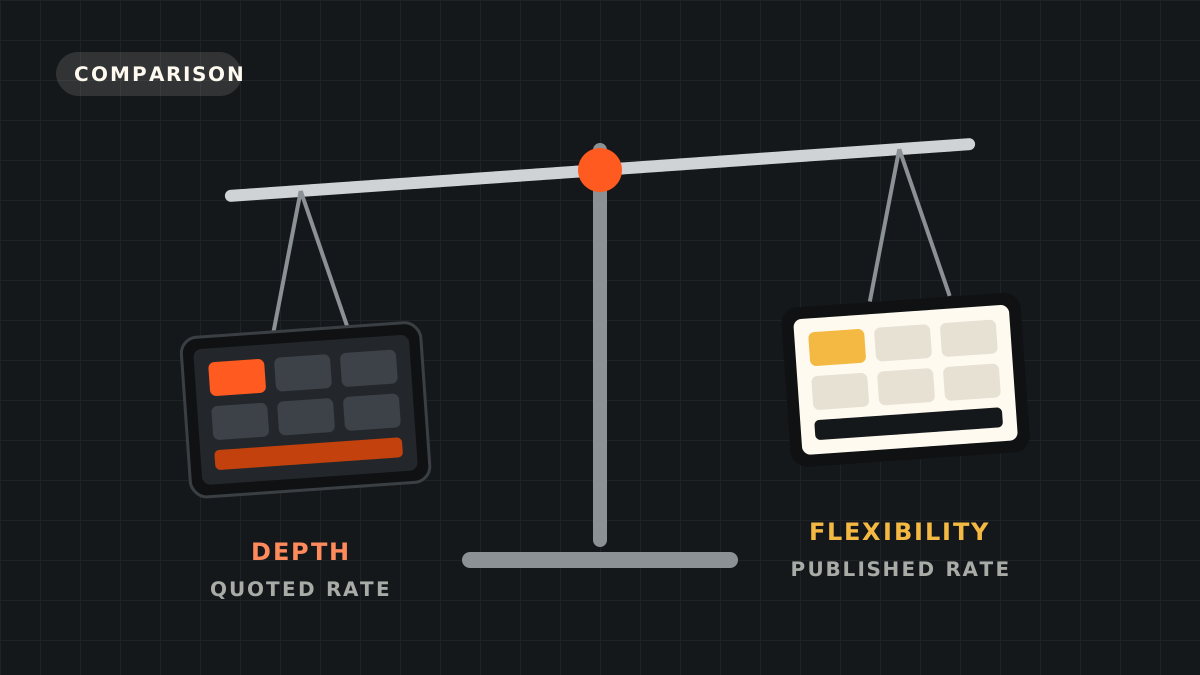
Toast vs SpotOn
Prices, rates, contracts, hardware and support, with a worked cost example on real card volume.
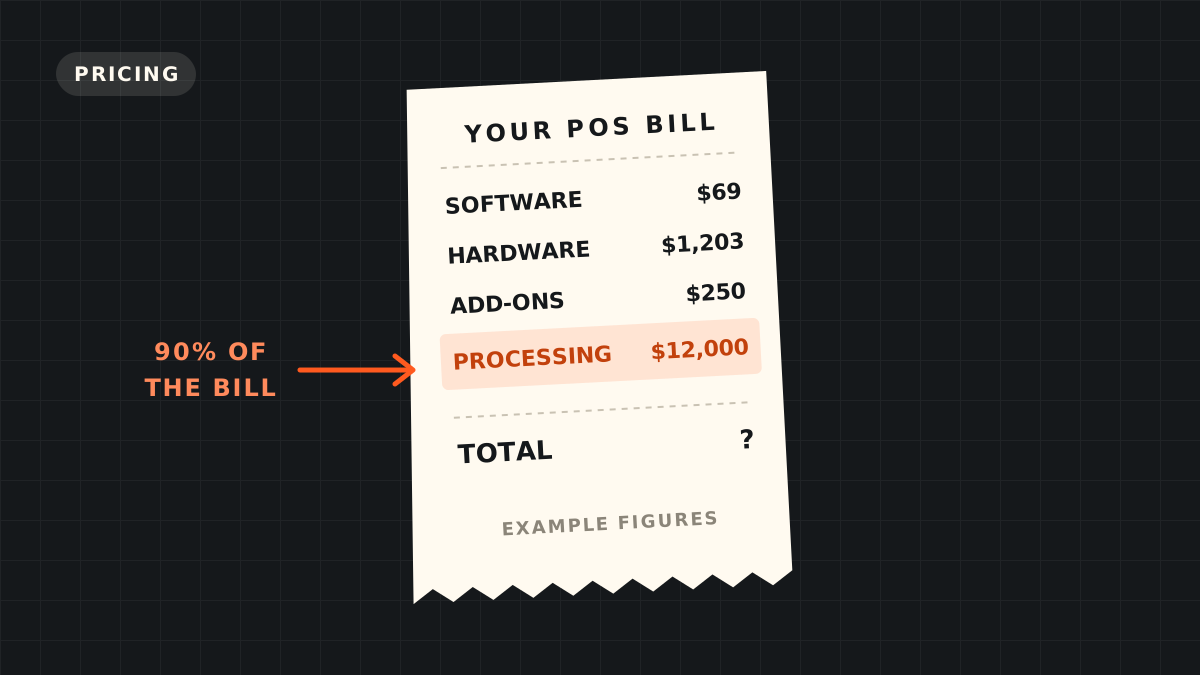
Toast pricing, explained
Plans, processing rates, hardware, add-ons and the card volume where the $0 plan stops being cheap.
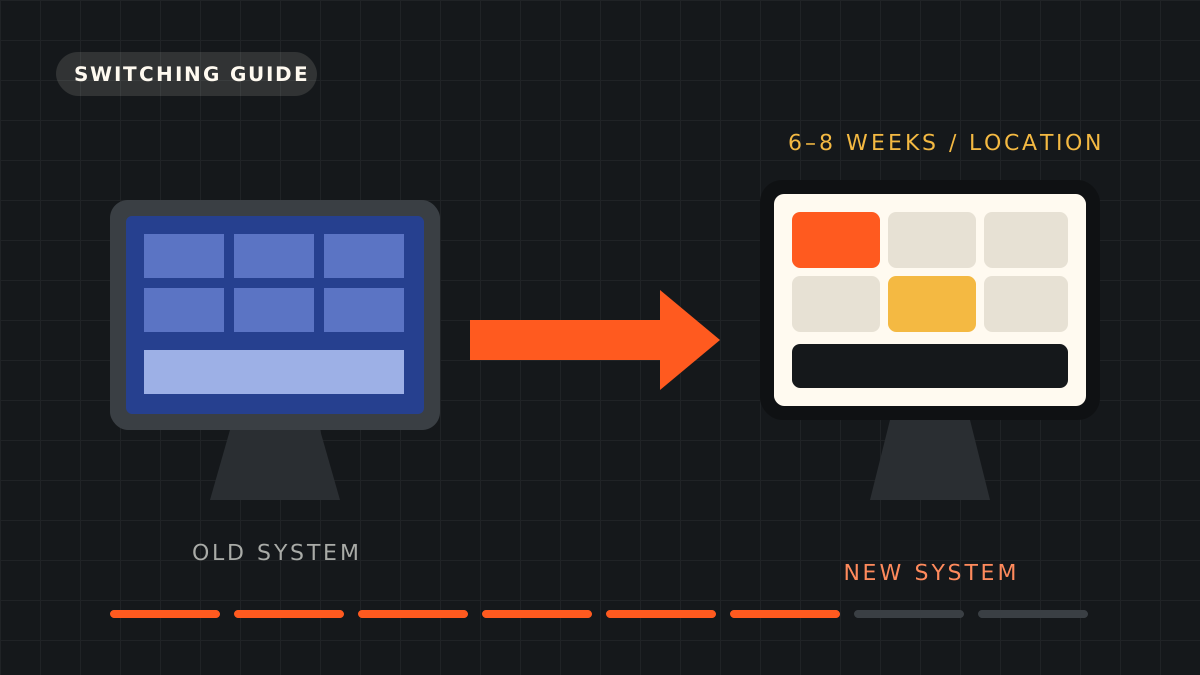
Switching from Aloha to Toast
Contracts, hardware, network, menu rebuild, gift cards and install day, in the order they bite.